Why This Matters: Nuclear Weapons and You
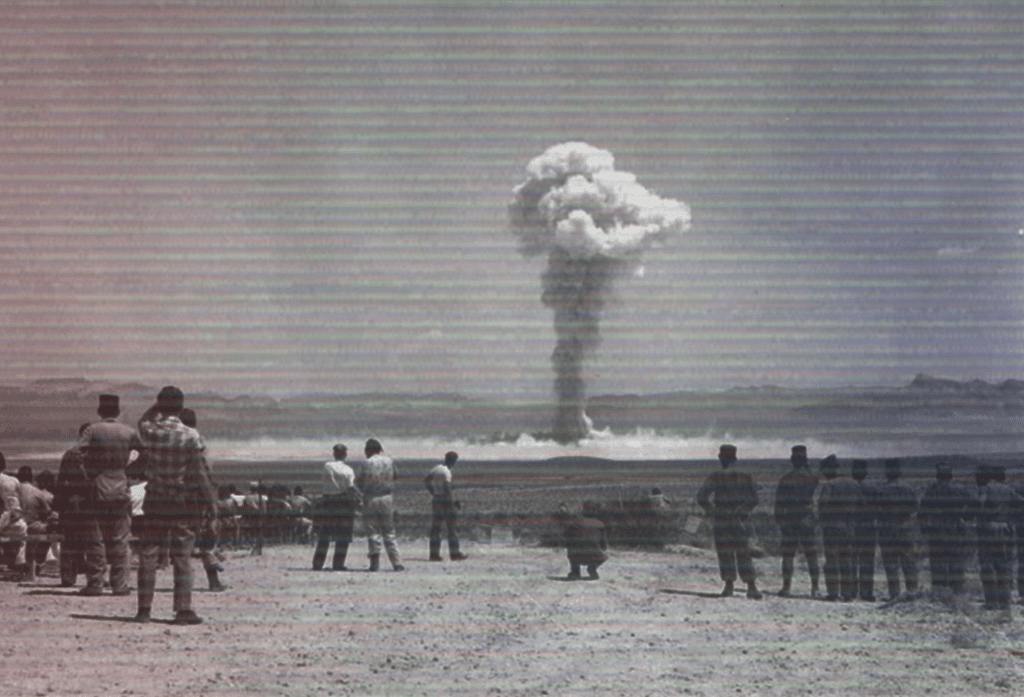
Learning how to think about the unthinkable
The detonation of the first atomic device 77 years ago ushered America and the world into the Atomic Age. This moment, and the work which went into understanding atoms and developing the atomic bomb, gave way to the devastation of Hiroshima and Nagasaki, the spread of nuclear weapons, and the decades-long competition between the United States and the Soviet Union to build weapons increasingly more powerful and accurate than the last.
The Cold War arms race defined the geopolitics of the era. But its impact was also local and often personal.
While some American cities bustled as defense industries moved into town, many other communities were displaced as the era’s nuclear powers cleared land to test their weapons. Those who lived near nuclear test sites — located in such places as Australia, Kazakhstan, the Marshall Islands, and Nevada — were harmed by radioactive fallout.
Meanwhile, public service announcements, popular culture, and the news often provoked fear and dread — though they could also inspire informed conversations.
Since the end of the Cold War, the world hasn’t thought too much about competition between two heavily armed nuclear powers. But these weapons never went away — a point made clear by Vladimir Putin’s saber-rattling and China’s nuclear build-up.
For today’s learners — with no memories of the Cold War and already concerned with the climate crisis — the risks associated with nuclear weapons are yet another complex issue to manage. Though these weapons have shaped the world in many ways, discussions of this topic can often confuse more than clarify.
This is why EGF partnered with the Rumie Initiative: to bring accessible “Byte”-sized lessons to young learners. With a click of a button, anyone interested can develop a framework to think about nuclear weapons (or one of several other topics, from alliances to the Vietnam War).
We at EGF believe that in today’s interconnected world, everyone should have access to a global politics education. We hope you, and learners around the globe, find these Bytes an engaging and helpful tool for making sense of today’s headlines. As the saying goes, knowledge is power.
Please drop me a note. What global issues do you think about?

Allyn Summa is the former executive director of the Institute for Global Affairs.






Donald Trump’s Cowboy Diplomacy