Get Real
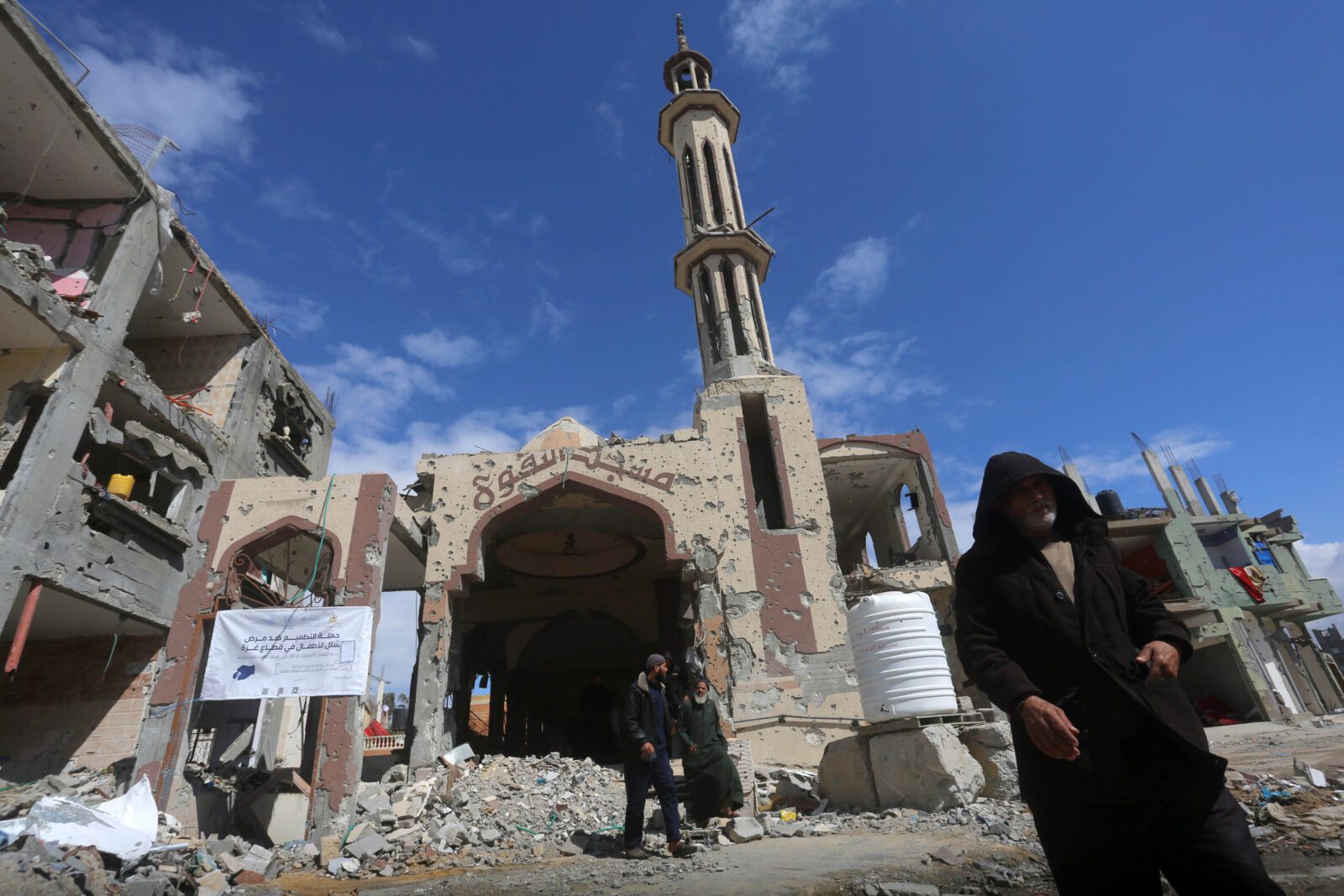
The realist foreign policy case for shifting America’s relationship with Israel.
This article appeared in The New Republic on September 2, 2025
The ceasefire celebrations in Gaza last January were so exhilarating that Palestinian Al-Jazeera journalist Anas Al-Sharif could barely be heard on air over the shouts of his countrymen. “Now I can finally remove this helmet, which has exhausted me throughout this period, and this vest, which has become part of my body,” he said as he shed the protective equipment he had been wearing almost constantly for 15 months. Al-Sharif was then lifted upon the shoulders of the jubilant crowd.
The ceasefire had produced something rarely felt in the region in the aftermath of Hamas’s October 7, 2023, attacks that killed 1,200 Israelis: hope. Although the tentative agreement emerged from a rare bit of bipartisan collaboration—a team of advisers appointed by America’s outgoing president, Joe Biden, worked together with an envoy from its incoming one, Donald Trump, to secure it—its announcement was auspicious, coming on January 15, 2025, five days before the inauguration. Under Biden, there had been more than a year of bloodshed and suffering. Now, Trump’s disruptive approach to politics, both domestic and international, had come to Palestine, and it seemingly had helped halt the war.
More than six months later, Al-Sharif was killed alongside his colleagues in a targeted Israeli airstrike on August 10. And the situation in Gaza is arguably worse today than it has been at any point since October 7.
…
Read more of Jonathan’s article in The New Republic

Jonathan is the Program Director of the Institute for Global Affairs at Eurasia Group’s Independent America program.
This post is part of Independent America, a research program led out by Jonathan Guyer, which seeks to explore how US foreign policy could better be tailored to new global realities and to the preferences of American voters.




Is the Iran war turning young voters away from Republicans ahead of the midterms?