TRACKING AMERICAN PUBLIC ATTITUDES
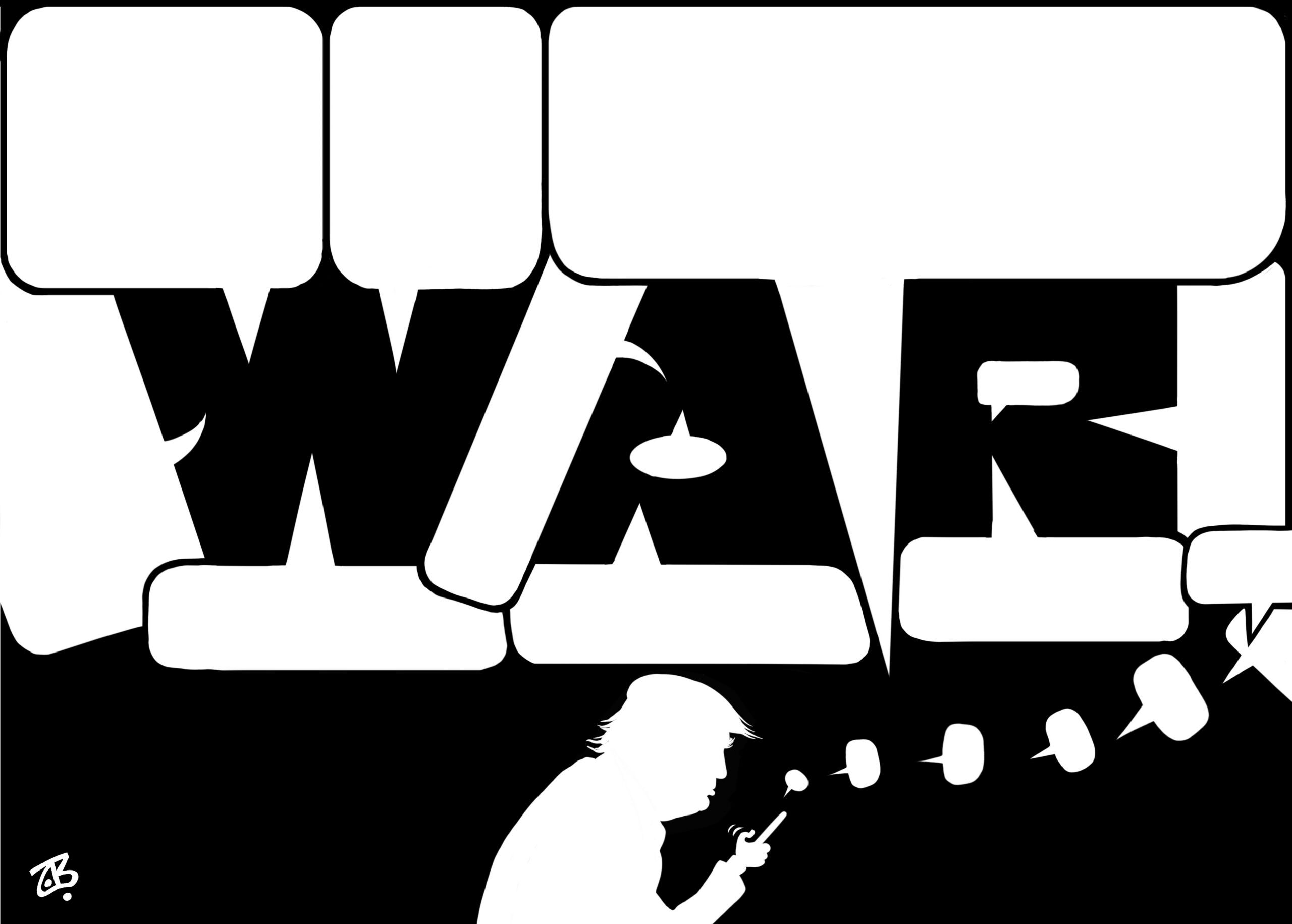
WAR PRESIDENT
American views of Donald Trump’s national-security strategy, the war with Iran, support for Israel, pressure on Cuba, and the use of military force at home and abroad.
Executive summary
The Institute for Global Affairs (IGA) at Eurasia Group surveyed 1,000 voting-age Americans on their views of President Trump’s national security strategy in the Middle East, the Western Hemisphere, and at home. The survey was conducted on April 24–27, 2026, amid a fragile US-Iran ceasefire, an American-enforced maritime embargo in the Strait of Hormuz, and deepening fractures with NATO allies.
This is the first in a series of IGA polls tracking public opinion ahead of the 2026 midterm elections.1
58%
disapprove of President Trump’s handling of the war with Iran
79%
say the war has affected
cost of living
78%
think allied support matters before using military force
The war with Iran is broadly unpopular — many doubt whether the fight is worth the costs and say it affects their vote.
Nearly twice as many people disapprove of President Trump’s handling of the war with Iran as those who approve. Fifty-eight percent of Americans disapprove, 33 percent approve, and 9 percent are not sure.
About four in five Americans (79%) say the war has affected cost of living, and more than half (62%) say it’s become harder to pay the bills in the past six months.
A majority (56%) say the war affects who they support in elections, including more than a third (36%) who say it does so a great deal. That figure climbs to 71 percent among Democrats, with roughly half of Independents (49%) and 45 percent of Republicans saying the same.
About twice as many people think the war has made the United States less safe than those who say it’s made the country safer: Nearly half of Americans (49%) think military operations against Iran are making the US less safe and about a quarter (24%) say they are making the US safer. A plurality (43%) believe Iran is more likely to get a nuclear weapon now than before the war began.
But on Iran, Republicans largely stand by the president (though dissent is noteworthy).
Seventy-three percent of Republicans approve of Trump’s handling of the war — and about one in five Republicans (19%) disapprove. Only 55 percent think it’s making the United States safer.
Far more Republicans than Democrats and Independents think the campaign has set Iran’s nuclear program back: 55 percent say Iran is less likely to develop a nuclear weapon today than a year ago, compared to 24 percent of Democrats and 26 percent of Independents.
Majorities of Republicans cite preventing Iran from advancing its nuclear program (73%), protecting the United States from attacks (65%), and keeping the Strait of Hormuz open (57%) as reasons for continuing the war.
Support for requiring congressional approval before military action has fallen sharply since the fall, driven largely by Republicans — only 32 percent of whom think such authorization is necessary.
Americans oppose escalation, blame Washington as much as Tehran, and are questioning longstanding relations in the Middle East.
A majority (62%) oppose a ground invasion of Iran, and more than half (55%) say it would be morally unacceptable to strike civilian infrastructure to reopen the Strait of Hormuz while a quarter (25%) say it would be acceptable.
Asked who is most responsible for the war, a plurality of Americans (30%) blame the United States. About as many blame Iran (28%) and slightly fewer blame Israel (24%). Among Democrats, 48 percent blame the United States. Among Republicans, 58 percent blame Iran.
Forty-five percent of Americans — including 67 percent of Democrats and 47 percent of independents — think the US relationship with Israel does more to hurt than to help US interests. Roughly one in five Republicans (21%) share that view.
A plurality (38%) say the United States should stop supplying weapons to Israel, including 55 percent of Democrats and 39 percent of independents. Among Republicans, 35 percent support continuing to supply arms without new restrictions and 29 percent support continuing with conditions on use.
The Trump administration has also turned its pressure on countries closer to home — but Americans oppose the embargo on Cuba, doubt the effectiveness of sanctions, and want diplomatic relations to improve with Havana.
A plurality (47%) of Americans disapprove of the US trade embargo on Cuba — including 74 percent of Democrats and 41 percent of Independents — while 62 percent of Republicans approve.
Just 22 percent of Democrats believe US economic pressure can produce political change in Cuba, and 43 percent of Independents doubt it will. Among Republicans, 54 percent expect sanctions to produce reform.
A plurality (44%) say the United States should improve diplomatic relations with Cuba only if its government undertakes meaningful political reform. About one in three Americans (34%), including a majority (53%) of Democrats, would improve relations regardless of Cuba’s system of government.
Americans are broadly uneasy about President Trump’s unilateral use of military force and his fit as commander in chief.
A majority (55%) say President Trump uses the military too much; just 28 percent say he uses it the right amount.
A majority (54%) say US policies under the Trump administration have made the world less safe, and a similar number say other countries have less respect for the United States than they did before.
Most Americans (78%) think it’s important for the United States to have support from allies and international organizations before using military force.
More Americans want to decrease military spending than to maintain or increase it — a finding that holds even when maintainers and increasers are combined.
Fewer Americans today than last fall view Trump as a peacemaker, and the sharpest decline has come from within his own party: the share of Republicans holding that view has dropped 14 points.
When offered a dozen descriptors to choose from, the adjectives that Americans most frequently selected to describe Trump were reckless (33%), erratic (26%), or destructive (26%).
Specific findings
Chapter 01 · Iran
How Americans view the war in Iran
Americans disapprove of the Trump administration’s handling of the war with Iran, don’t think it’s making the United States any better off, and are pessimistic about its chances of success.
Chapter 02 · Israel
Shifting views of Israel
American support for Israel is fraying. Many Americans — particularly younger people and Democrats, but a meaningful share of Republicans as well — question the US-Israel relationship and see it as a moral hazard, entangling the United States in conflicts it might otherwise avoid.
Chapter 03 · Cuba
US perceptions of Cuba
Americans disapprove of the US trade embargo on Cuba, doubt sanctions will produce political change in Havana, and want diplomatic relations to improve — though most attach conditions to warmer ties.
Chapter 04 · Defense
The new view on American defense
Americans are increasingly uneasy with the executive branch’s unilateral exertion of power. Support is thin for the Trump administration’s use of the military and concentrated among Republicans. Majorities back congressional war authority and want a smaller military budget, and the public is increasingly skittish of the president’s mercurial approach to diplomacy and war.
Endnotes
- Thank you to IGA CEO Mark Hannah and development and operations associate Sasha Benke. Thank you to IGA intern Anuva Wardah. A special thank you to Annie Luz Gugliotta for her design talents. Thank you to Kate Brown, Andrew Claster, Jeffrey Friedman, Craig Kafura, Andrew Payne, and Jeremy Shapiro, who read early versions of the survey instrument. ↩︎
The findings and interpretations presented in this report are those of the authors alone and do not necessarily reflect the views of the Institute for Global Affairs. Any errors or omissions are our own.
This post is part of Independent America, a research program led out by Jonathan Guyer, which seeks to explore how US foreign policy could better be tailored to new global realities and to the preferences of American voters.



Is the Iran war turning young voters away from Republicans ahead of the midterms?