Trump Is Waging One Big War Against the Rest of the World
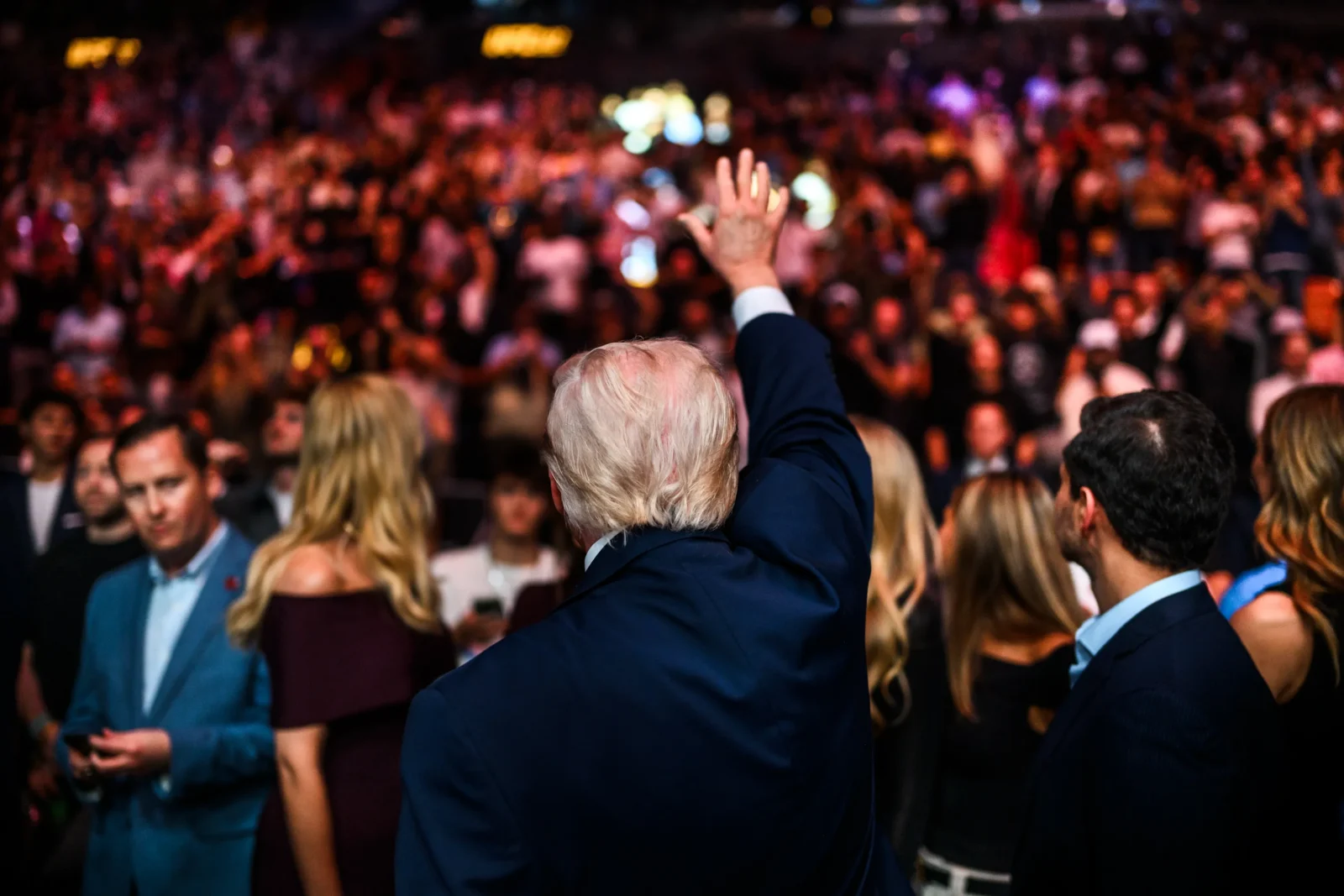
The bombings, assassinations, and kidnappings that have defined much of Trump’s second term make more sense understood together, rather than as disparate events.
This article appeared in The New Republic on April 15, 2026
Before Donald Trump’s recent military campaigns, Iran and Venezuela weren’t often spoken of in the same breath. But in fact, the countries share much in common. They’ve both been demonized as evil, as bad guys, formally designated as states that promote terrorism. They’ve both suffered under intensive sanctions that have damaged life for civilians. And influential advocates from both places have been gunning for regime change for decades. Although recently their paths have diverged, with Iran’s battered regime hanging on even after a month of American and Israeli fire, and Venezuela’s government left intact but co-opted, their fates may yet converge again, thanks to a recently rebranded “Department of War” directed by a president who has heedlessly started confrontations around the globe without much of a plan. As the retired career diplomat Chas Freeman put it in January, “The United States now unabashedly presents itself as an untrustworthy expansionist power that substitutes unilateral diktats, intimidation, and the use of force for diplomacy.”
Trump’s foreign policy has long been misunderstood because of its inherent incoherence. He came to power in 2016 by telling Americans what they wanted to hear. He had little interest in laying out a grand strategy or a bigger worldview beyond his promise to “Make America Great Again,” itself a slogan in which voters could hear what they wanted. His forceful criticism of the Iraq War, however, differentiated him from Hillary Clinton, who voted for it when she was in the Senate in 2002. But it was never all too clear whether Trump had opposed George W. Bush’s invasion or just thought his Republican predecessor should have taken the oil.
The president’s more recent turn to militarism has led to immense changes in US statecraft. In the first months of his second term, he enlisted Elon Musk and the newly formed Department of Government Efficiency to dismantle America’s soft-power infrastructure, notably the humanitarian and development arm USAID, but also government-funded think tanks, media organizations, and other Cold War legacy programs. In Trump’s world, soft power apparently has little value. At the same time, Trump has dismantled the global alliance system. He has slowly chipped away at NATO, built a “Board of Peace” to counter the United Nations, and levied tariffs in contradiction of the global economic order.
…
Read Jonathan’s full piece in The New Republic
Written by Jonathan Guyer
Jonathan is the Program Director of the Institute for Global Affairs at Eurasia Group’s Independent America program.
This post is part of Independent America, a research program led out by Jonathan Guyer, which seeks to explore how US foreign policy could better be tailored to new global realities and to the preferences of American voters.


Is the Iran war turning young voters away from Republicans ahead of the midterms?