AOC Meets World
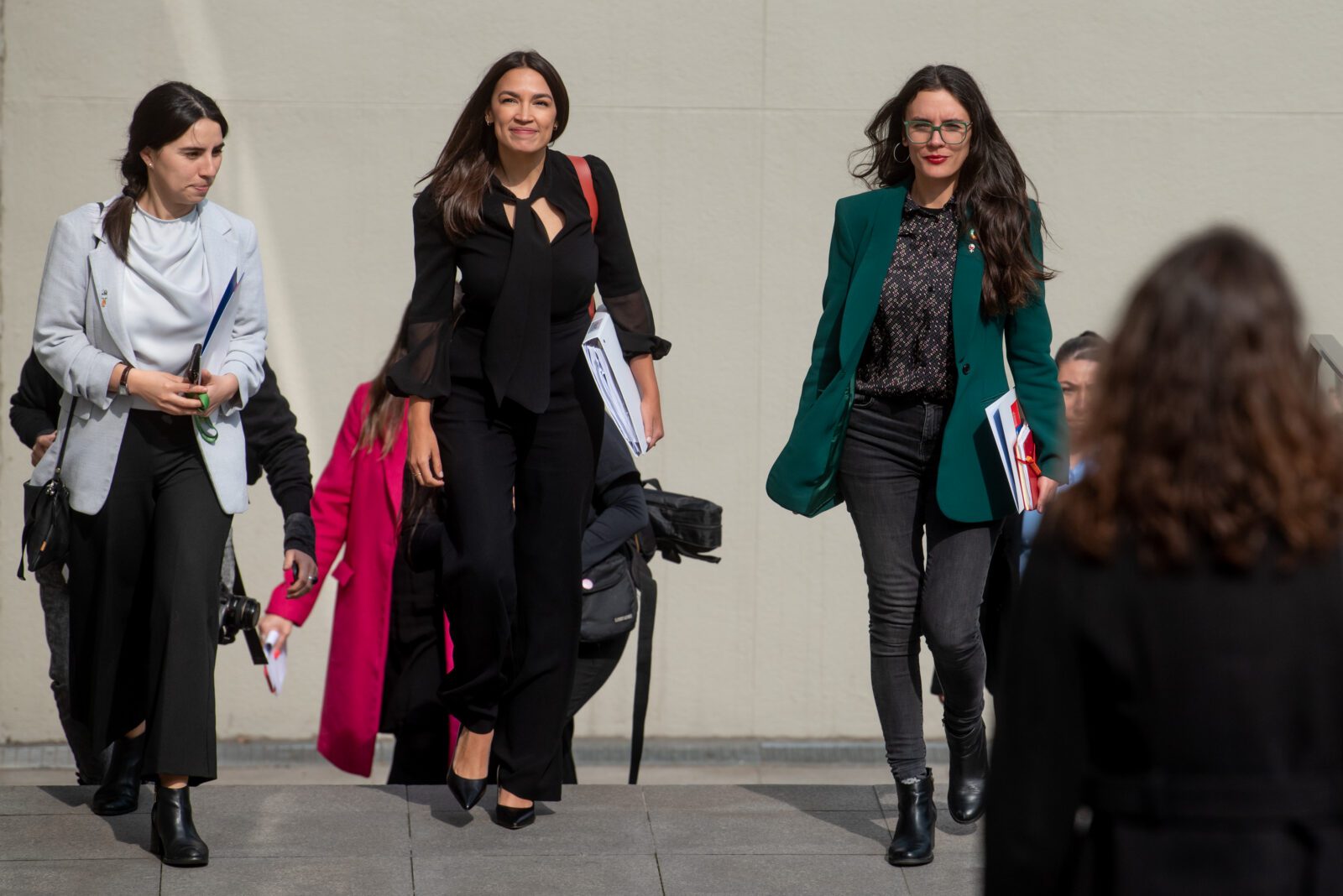
The congresswoman’s rise was powered mostly by domestic issues. But she is slowly expanding to foreign affairs.
This article appeared in Foreign Policy on July 14, 2026
When Rep. Alexandria Ocasio-Cortez delivered her first major foreign-policy remarks during a panel discussion at the Munich Security Conference in February, a moderator asked her whether the United States should send troops to Taiwan in the event of a Chinese invasion. After some pauses, she said: “What we are hoping for is that we want to make sure that we never get to that point.”
Ocasio-Cortez’s answer reflected long-standing U.S. policy on this thorny issue. But explaining strategic ambiguity toward Taiwan doesn’t make for a straightforward sound bite, and critics of the 36-year-old congresswoman went on the attack. “AOC, she was unable to answer a simple question,” U.S. President Donald Trump said. The New York Times and Washington Post derided Ocasio-Cortez’s “stumbles,” ditching standard practice to transcribe her “um”s and “ah”s.
National-security experts saw Ocasio-Cortez’s answer as a misstep in part because she has previously been enigmatic about her foreign policy. She turned down a 2020 invitation to speak in Munich, according to correspondence viewed by Foreign Policy. At the time, she seemed squarely focused on delivering for her New York district.
…
Read Jonathan’s full piece in Foreign Policy
Written by Jonathan Guyer
Jonathan is the Program Director of the Institute for Global Affairs at Eurasia Group’s Independent America program.
This post is part of Independent America, a research program led out by Jonathan Guyer, which seeks to explore how US foreign policy could better be tailored to new global realities and to the preferences of American voters.




Is the Iran war turning young voters away from Republicans ahead of the midterms?