Are US Military Bases Overseas Crucial Assets or Risky Liabilities?
The US military has hundreds of bases and facilities around the world. Are they worth it?
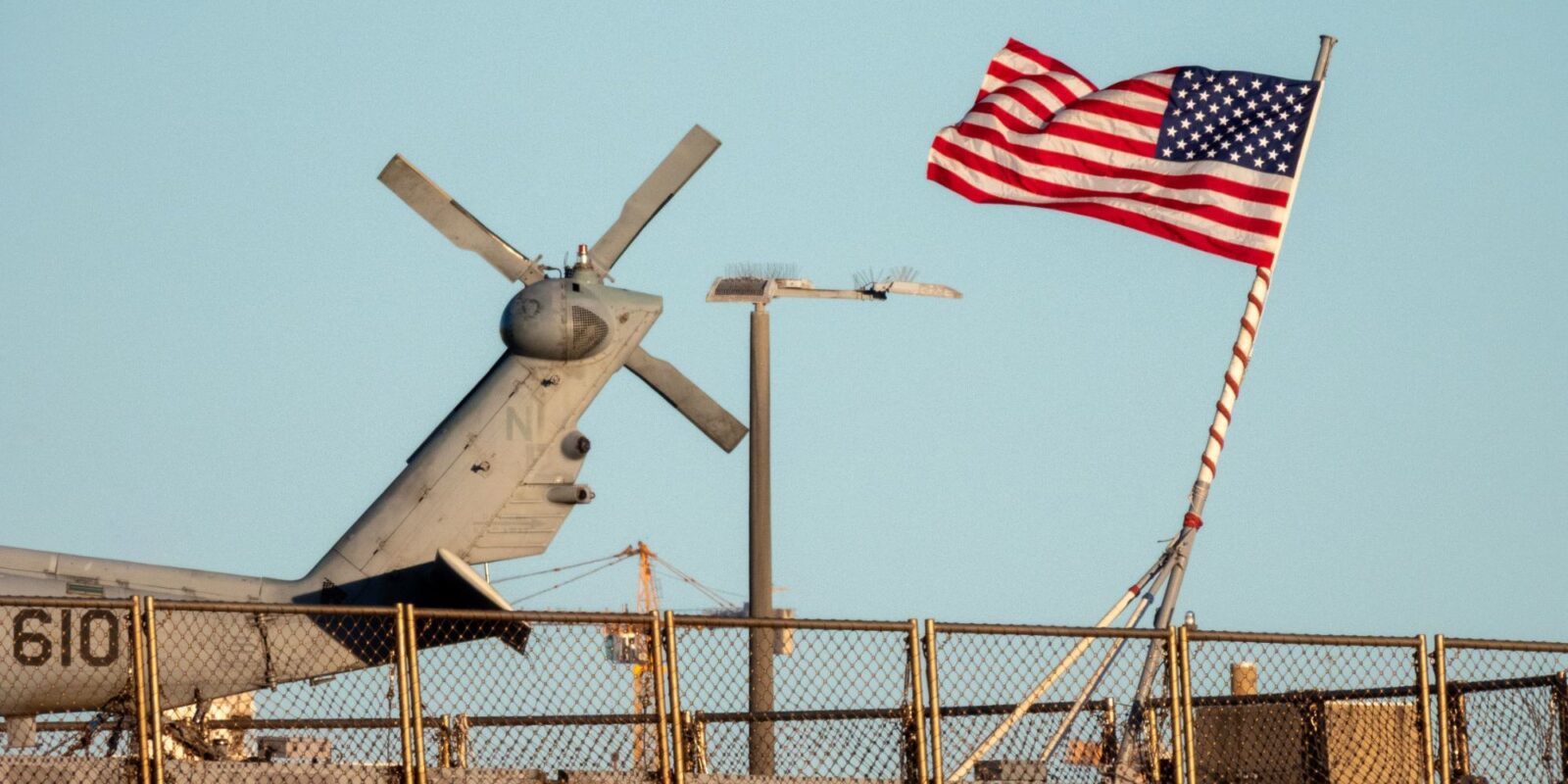
The military access debate is conducted almost entirely in Eurasian terms. Yet, historically, the Western Hemisphere — and the regions of Central America and the circum-Caribbean in particular — is where the US first built its access system after the 1898 Spanish-American War, and where that presence has deeply evolved over a longer period of time, more so than in other regions (with perhaps the exception of some island-nations in the Pacific). Understanding how and why that presence in Central America and the circum-Caribbean changed over time, and how it relates to more recent successive cycles of base realignment and closure followed by new waves of base rebuilding, casts light on the situation now being experienced in other regions, where the question of access is being actively debated.
The US’s presence in the region, its expansion and retreat over the 20th century and into the 21st, proceeded through cycles of convergence and blowback: treaty ratification, asymmetric bargaining, and the results of bilateral economic relations that the economic historian John Coatsworth described, in his book of the 1990s, as those between the Clients and the Colossus. Across these cases, host states, with “excessively close and subordinate ties to the United States,” have allowed and then revoked access for much the same reasons analysts now list as hypothetical future risks in other continents: sovereignty, reputation, or blowback, the prospect of becoming a target, whether domestically or internationally.
The access system is now being rebuilt in the region, taking into account this old history, as part of a broader project to create new sites and revive earlier ones — Puerto Rico, Panama, Ecuador, Trinidad and Tobago — under different guises and new modalities: reactivating, reopening, or returning under new status-of-forces agreements, with logistical access justified in terms of cooperative security locations, rotational deployments, airbase military transit, and temporary presence. The region’s record complicates the conclusion that access denied would mean the end of American projection of power. In the Caribbean and Central America, despite its strategic proximity to the United States, denial meant not an end to projection, but a change in its form. In most countries in the region, large permanent installations gave way to lighter, more provisional, kinetic arrangements, barring a few cases.
Where access is currently most being contested in Europe and the Asia-Pacific region, the more likely near-term outcome may not be outright denial but substitution, following a similar trajectory in the Western Hemisphere: a shift toward forms of presence and access that are less formal, less durable, and less noticeable to the processes through which such commitments are ordinarily reviewed in host countries. That is a subtler outcome, and a harder one to measure, which is reason enough to look first at subregions in the same hemisphere, where these historical patterns of transition have already taken place.
Read more in Inkstick

This post is part of Independent America, a research program led out by Jonathan Guyer, which seeks to explore how US foreign policy could better be tailored to new global realities and to the preferences of American voters.



Is the Iran war turning young voters away from Republicans ahead of the midterms?