WAR PRESIDENT: THE IRAN TRAPTRACKING AMERICAN PUBLIC ATTITUDES
War Fatigue
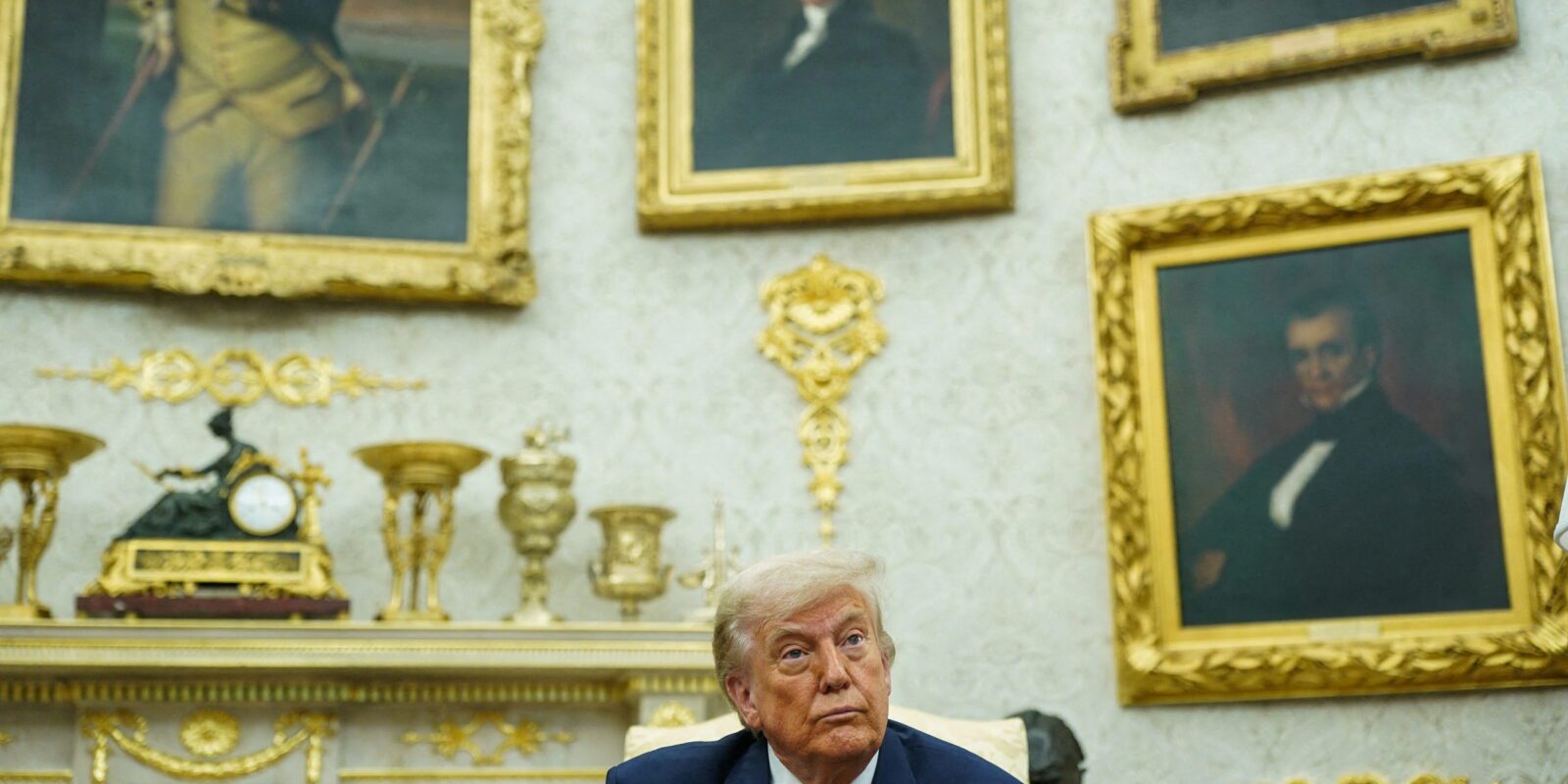
This nationally representative survey of 1,000 voting-age Americans, IGA’s second since the start of the war with Iran, was fielded between August 11 and 14, 2026, before renewed hostilities ended a month-long lull in the conflict. The memorandum of understanding signed in June was frayed from the start — each side read the agreement’s terms very differently and accused the other of violating it — and it was days away from formally expiring. With diplomacy stalled and uncertainty over the Strait of Hormuz keeping oil prices high, this survey finds a president trapped by a war with no clear exit, rising economic costs, and a Republican base whose patience is beginning to wane.
Key findings
Just 34% of Americans approve of President Trump’s handling of the war with Iran. Most Republicans back him (74%), but less emphatically than in the spring: the share who “strongly approve” fell from 49% to 34%, while the share who “somewhat approve” rose from 24% to 40%.
Democrats and Republicans are divided on the goals that justify continuing military action (for 51% of Democrats, none are worth it, compared with 7% of Republicans), whether the war is making the United States more (49% of Republicans) or less safe (70% of Democrats), and who bears most responsibility (53% of Democrats blame the US while 55% of Republicans blame Iran).
Democrats (91%), Independents (79%), and Republicans (73%) agree the war has increased the cost of living “some” or a “great deal.”
When the United States attacked Iran earlier this year, the Trump administration expected the war to end quickly. In the weeks after the start of the US-Israeli offensive, Donald Trump repeatedly asserted that military operations were running ahead of schedule and that an American victory was just weeks away. Sustaining the war “won’t be difficult,” he assured The New York Times a day after the initial strikes killed Supreme Leader Ayatollah Ali Khamenei and other senior officials.1
It didn’t take long for intelligence assessments and accounts from officials close to the president to emerge that cast doubt on the effectiveness of airpower to topple the battered — but not defeated — Iranian regime, and America’s capacity to foment local resistance inside of Iran.
Six months later, the war has fallen into stalemate. Many of the issues that the Trump administration had hoped to put to rest — Iran’s nuclear program and ballistic missiles, and the regime’s threat to Israel and US forces in the Middle East — remain unresolved, while new issues have come to the fore — namely, Iran’s control over the Strait of Hormuz.
This is the Iran trap. It’s sharpest when it comes to Iran’s nuclear program, an issue that has defined US-Iran relations for two decades and that Americans cite as often as any other justification for the war. Yet more Americans say the war has made an Iranian bomb more, not less, likely.
For a president who fashions himself a peacemaker, Trump may also have a political problem at home.2 While polling finds the war has been unpopular from the start, it has since revealed major fault lines among his base, where strong Republican approval has fallen, and among Independents, whose disapproval has climbed. Unlike during previous administrations that have gone through the process of galvanizing support for major military operations, this administration has made little effort to sell voters on the war, except to downplay the financial burdens it has placed on everyday Americans.3
Most Americans, except for Republicans, disapprove of Trump’s handling of the war — but Republican support has cooled.
Overall, approval of Trump’s handling of the war with Iran hovers at 34%, roughly the same share as when we fielded this question in April. Opposition, however, is widespread — 60% disapprove — and deeply held: more than three times as many people strongly disapprove (46%) as only somewhat disapprove (14%). Only 6% say they are unsure.
With opposition to the war holding steady, cracks are beginning to show among its supporters. The share of Americans who strongly approve of Trump’s handling has fallen (-5 points), while the share who only somewhat approve has risen (+6 points) — both statistically significant shifts. Controversy over the war in conservative and right-wing circles — seen in the defections of former representative Marjorie Taylor Greene and broadcaster Tucker Carlson over the administration’s Middle East policies — may help explain the hedging. Although most Republicans still approve of Trump’s handling of the war (74%, compared to 73% in spring), the share who strongly approve has fallen by nearly a third (-15 points), while the share who only somewhat approve rose (+16 points).
Republicans have not abandoned Trump, but their approval has become more qualified. The question is whether this is a temporary blip or a trend that deepens the longer the war drags on and prices stay high. For an administration that has appeared out of touch with its populist instincts and nonchalant about the effect of its sagging approval ratings on this year’s midterms — an election in which observers take seriously the possibility of Democrats winning both the House and Senate — the shift among Independents may be the most consequential.
Support for the war has faltered among Independents. Fewer today are undecided — the share answering “not sure” has fallen by half (-8 points) — and approval has slipped (-6 points), from 23% to 17%. Consequently, their disapproval has shot up 13 percentage points, from 62% to 75%. Three in four Independents now disapprove, either strongly (51%) or somewhat (24%) — an outlook far more aligned with Democrats, nine in ten of whom disapprove (89%), than with Republicans, among whom only about a quarter disapprove (23%).
Majorities of Democrats and Independents think attacking Iran was a mistake.
Americans question whether this war should have been started in the first place — 52% say it was a mistake for the United States to take military action. That view is held by eight in ten Democrats (81%) and 59% of Independents. And while Republicans have cooled on Trump’s handling, nearly two-thirds (65%) say it was not a mistake.
Most Democrats see no goal justifying continuing the war.
The Trump administration’s rationale for the war has shifted since it began. More recently, its objectives have centered on reopening the Strait of Hormuz, where Iran has restricted the passage of commercial vessels. The memorandum of understanding between the United States and Iran was meant to provide a framework for resolving their dispute over the Strait, but the two sides are still sparring over the important waterway.
When presented with a list of potential reasons for continuing the war, about half of Democrats said none justified continued operations (51%) — more than twice the share who chose their next most common response, protecting the United States from attacks (22%).
Most Republicans, by contrast, identified grounds for continuing the fight. Majorities said the United States should keep fighting to prevent Iran from developing nuclear weapons (69%), protect America from attack (62%), and reopen the Strait (54%).
No single rationale garnered majority support among Americans. The most commonly cited goals were preventing Iran from developing nuclear weapons (40%), protecting the United States from attacks (40%), and keeping the Strait of Hormuz open for oil shipments (33%). Roughly three in ten said none of the goals was worth continuing the fight (30%).
Republicans vary in views of US safety during the war.
Whatever the war’s aims, just under half of Americans (46%) say US military operations are making the United States less safe — and the partisan divide is stark. Half of Republicans say operations are making the country safer (49%), compared with 16% who say less safe. Among Democrats, 70% say the war is making the country less safe, while only 5% say it’s making the country safer. Almost no Democrat — a statistically insignificant 1% — thinks the war is making the country “much more safe.”
Overall, one in five Americans think the war has made the United States neither more nor less safe (22%). A quarter of Republicans (26%) and Independents (25%) share this view, compared with less than a fifth of Democrats (15%).
A plurality of Americans think Iran is more likely to develop a nuclear weapon today than a year ago.
The possibility that Iran might one day weaponize its civil nuclear energy program was one of the stated pretexts for this war. The Trump administration vowed that Iran would never possess a nuclear weapon, and the military campaign has sought to degrade Tehran’s technical capacity to build one. Yet the war itself — the destruction of much of Iran’s military, and attacks both real and threatened on the country’s leadership and civilian infrastructure — creates precisely the incentives that drive countries toward the bomb.
Although preventing an Iranian bomb is among the most-cited justifications for continuing military operations, Americans on balance doubt the United States will achieve that objective. Forty-three percent think Iran is more likely to develop a nuclear weapon today than a year ago, compared with 35% who think it’s less likely — shares essentially unchanged from the spring.
Republicans are the exception, however. Democrats say more likely by a wide margin, 56% to 23%, and Independents closely follow: 48% say more likely and 19% less likely — though a third of Independents say they are not sure (33%). Republicans — seven in ten of whom cite preventing an Iranian bomb as a reason to continue the war — see that prospect receding. A majority (58%) say Iran is less likely to develop a nuclear weapon today than a year ago, compared with 28% who say more likely.
Most Americans, across party lines, say the war has raised the cost of living.
The war’s impact on Americans’ pocketbooks was felt almost immediately, as oil and gas prices spiked at the start of hostilities and costs have mounted in the months since. An overwhelming majority of Americans say the war has raised the cost of living at least some (81%) — and Democrats are the most convinced: 91% say the war has increased costs either a great deal or some, including two-thirds (66%) who say a great deal.
The war’s impact on Americans’ pocketbooks was felt almost immediately, as oil and gas prices spiked at the start of hostilities and costs have mounted in the months since. An overwhelming majority of Americans say the war has raised the cost of living at least some (81%) — and Democrats are the most convinced: 91% say the war has increased costs either a great deal or some, including two-thirds (66%) who say a great deal.4 These shares remain steady from the spring, when we first asked the question just two months into the war. Independents are close behind, with 79% saying the war has increased costs some (34%) or a great deal (45%), followed by Republicans, with 73% saying the war has raised costs some (46%) or a great deal (27%).
When asked who bears most responsibility for the war, more Americans point to the United States or Israel (55% combined) than Iran (27%). A plurality names the United States as most responsible (33%), with smaller shares naming Iran (27%) and Israel (22%) — 16% are not sure.
Views on responsibility vary widely by party. Half of Democrats blame the United States (53%), a quarter blame Israel (25%), and 7% blame Iran. Most Republicans, by contrast, blame Iran (55%), with equal shares holding the United States and Israel most responsible (15% each). Independents are evenly split between the United States and Israel (30% each) as most responsible, while 17% say it’s Iran. In each of these partisan groups, more than one in ten are not sure — 14% of Democrats, 14% of Republicans, and 19% of Independents.
Older Americans are more likely to blame Iran for the war.
Age plays a large factor as well. Blame shifts toward Iran as respondents get older. Under-30s are more likely to find Israel responsible (27%) than Iran (15%), while those 65+ place responsibility on Iran (36%) well ahead of Israel (17%). Views of US responsibility, by contrast, stay fairly equal across age groups, all clustered around a third of responses.
Endnotes
1. Zolan Kanno-Youngs, David E. Sanger, and Tyler Pager. “Trump Says War Could Last Weeks and Offers Contradictory Visions of New Regime.” The New York Times, March 1, 2026. https://www.nytimes.com/2026/03/01/us/politics/trump-iran-war-interview.html.
2. Jonathan Guyer, Lucas Robinson, Eloise Cassier, and Ransom Miller. “Reckless Peacemaker: How Americans See Trump’s Foreign Policy.” Institute for Global Affairs at Eurasia Group, November 2025. https://instituteforglobalaffairs.org/2025/11/reckless-peacemaker-american-views-trump-foreign-policy/.
3. Erica L. Green. “Trump Says Americans’ Economic Pain Is Not a Consideration for the Iran War.” The New York Times, May 12, 2026. https://www.nytimes.com/2026/05/12/us/politics/trump-iran-war-americans-economy.html.
4. “Iran War Energy Cost Tracker.” Watson School of International Affairs, Brown University. https://iranwarcost.watson.brown.edu/; Ben Geman and Andrew Pantazi. “A Costly Crisis for American Drivers.” Axios, August 31, 2026. https://www.axios.com/2026/08/31/iran-russia-diesel-gasoline-prices.