China Views US Foreign Aid Retrenchment as a ‘Historic Opportunity’
But experts in Beijing recommend caution, continuity in order to reap the rewards
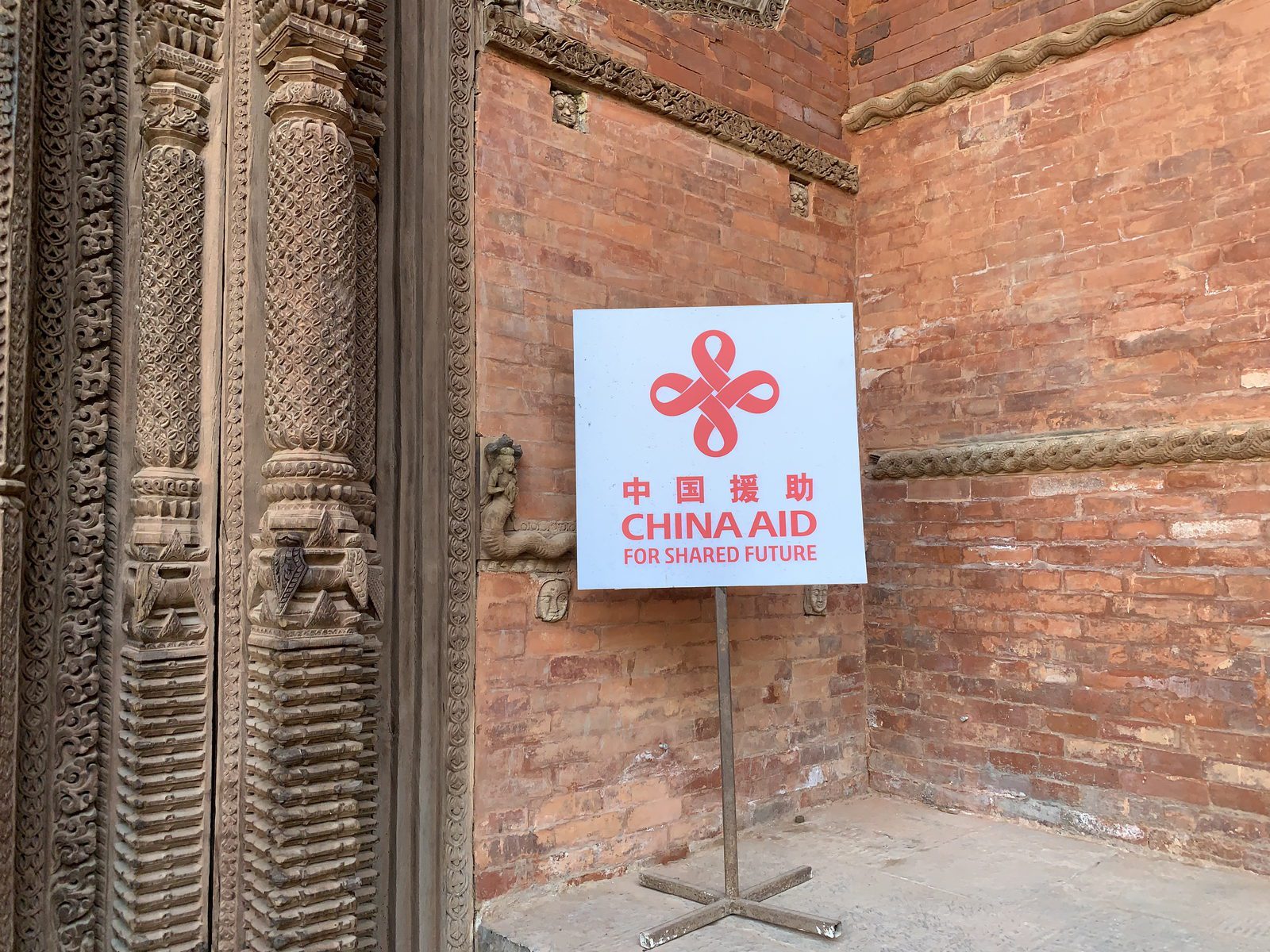
After the US Agency for International Development (USAID) was dissolved in July 2025, commentators debated whether China would “replace” or “fill the void” the agency left. A year on, the answer is clearly no: Beijing appears to have neither the capacity nor the will to succeed the United States as the preeminent provider of global foreign assistance. Beyond the easy rhetorical gains of funding a few headline-grabbing projects abandoned when US aid ceased, Beijing has not stepped up its commitments. The 2026 budget line items for foreign assistance and international development cooperation at the China International Development Cooperation Agency and the Ministry of Commerce (MOFCOM)—China’s two main aid-administering bodies—have plateaued or, in some cases, decreased.
Foreign aid gets limited attention in Chinese domestic media, reflecting its low salience and popularity at home. The little mainstream coverage of USAID’s dissolution focused on three themes: age-old accusations of underhanded political interventionism, turmoil in US domestic politics, and pushback on US commentary that China is poised to take advantage of US withdrawal. More nuanced conversations, however, are playing out in Chinese academia and research institutions about how Beijing should respond to the challenges and opportunities posed by the US’s abrupt retreat from the foreign aid space. The below review of articles published in the past year by top academic journals and think tanks—several of them government affiliated—reveals that experts view the US foreign aid retrenchment as a “historic opportunity.” Far from advocating that Beijing replicate or replace USAID, though, they call for China to tread carefully and play to its strengths to reap the rewards. Ultimately, many influential Chinese academics and experts see the foreign aid sector and the “global public welfare vacuum” created by the US retreat as a microcosm for a broader reconfiguration of international power, from US “unipolar hegemony” to “multipolar co-governance,” in which China has a leading role to play.
Chinese scholars and policy analysts widely recognize USAID as a critical asset for US foreign policy, soft power, and the global aid regime—one for which Beijing has no direct counterpart. As Elon Musk’s Department of Government Efficiency took an axe to USAID in spring 2025, a fellow at a MOFCOM-affiliated research institution mused: “Setting national positions aside, from a purely diplomatic standpoint, USAID is precisely one of the key departments of US foreign strategy since the Cold War—one of the agencies through which the US could carry out on-the-ground work abroad and gain a deep understanding of local realities—and it plays a special role in America’s globalist foreign strategy.” The irony is difficult to miss: The agency Trump and Musk dismissed as wasteful and dismantled was, in Beijing’s view, a valuable strategic tool.
In the months after USAID’s dissolution, Chinese experts on the United States analyzed the domestic drivers and international consequences of its closure. Several scholars note that because USAID was the world’s largest donor, its shuttering dealt a major blow to the international aid regime and global governance efforts, and also irreparably damaged US soft power and efforts to promote democracy abroad. The dean of the School of International Development and Cooperation at the University of International Business and Economics in Beijing wrote that “the Trump administration’s shutdown of USAID directly cut off the funding chains and organizational channels for numerous ‘democracy promotion’ programs, likely stalling related activities and weakening America’s soft-power capacity for political interference.” A scholar at Beijing Foreign Studies University’s Center for American Studies opined on consequences for US pro-democracy efforts in China, noting that “the freeze on foreign aid has forced dozens of organizations that have long monitored Chinese public opinion, human rights, and labor rights to suspend operations or disband …. Given Trump’s disdain for traditional ‘values diplomacy’ America’s willingness and capacity to intervene in Chinese human-rights issues may decline significantly for some time to come.”
Originally published by Lawfare

This post is part of Independent America, a research program led out by Jonathan Guyer, which seeks to explore how US foreign policy could better be tailored to new global realities and to the preferences of American voters.



Is the Iran war turning young voters away from Republicans ahead of the midterms?